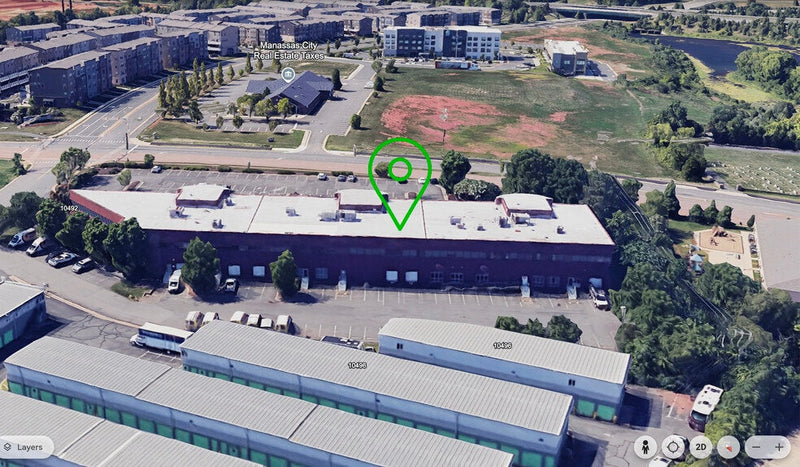
A triple net lease (NNN lease) is a commercial lease in which the tenant pays base rent plus its share of the property's three main "net" expenses: real estate taxes, building insurance and common area maintenance (CAM). The landlord receives rent that is largely free of operating costs, and the tenant takes on those costs directly. The exact split is set by the lease, so the wording matters as much as the label "NNN."
What the three "nets" cover
- Taxes: the tenant reimburses real estate taxes on the property, usually in proportion to the space it occupies.
- Insurance: the tenant reimburses the landlord's property and liability insurance premiums for the building, again typically by proportionate share.
- Maintenance (CAM): the tenant pays its share of common area costs such as parking lot upkeep, landscaping, snow removal, lighting, and sometimes management fees and structural or roof repairs, depending on how the lease is written.
Utilities and janitorial for the tenant's own space are normally paid by the tenant under almost every lease type, so they are usually outside the "three nets" discussion. For more on the maintenance piece, see what CAM is in a commercial lease.
How NNN rent is quoted
NNN rent is usually quoted as a base rent per square foot per year, with the additional expenses stated separately. Those extra charges are often called NNN charges or additional rent. They are typically estimated monthly and reconciled once a year against the actual costs.
Hypothetical example: a tenant leases 4,000 square feet at a base rent of $20 per square foot per year, plus estimated NNN charges of $6 per square foot. Base rent is $80,000 a year, NNN charges are $24,000 a year, and the total occupancy cost is $104,000 a year, or about $8,667 a month. The $6 estimate is invented to show the math; actual charges vary widely by property and by year.
NNN versus gross and modified gross leases
| Lease type | Who pays operating expenses | How rent is quoted | Common fit |
|---|---|---|---|
| Triple net (NNN) | Tenant pays base rent plus taxes, insurance and CAM | Base rent plus separate NNN charges | Retail centers, freestanding buildings, industrial and warehouse space |
| Modified gross | Shared; the lease spells out which costs the tenant pays | One rent figure, with certain items passed through | Multi-tenant office and flex buildings |
| Full-service (gross) | Landlord pays most operating expenses, often with an expense stop or base year | One all-in rent figure | Office buildings |
| Absolute NNN | Tenant pays everything, including structural and roof | Base rent only, with the tenant managing costs | Single-tenant buildings with a long lease |
The key point when comparing offers: a $22 NNN rate and a $28 full-service rate are not directly comparable. Convert both to an estimated total occupancy cost per square foot before deciding which is cheaper.
Advantages and drawbacks for tenants
For a tenant, a NNN lease can offer lower base rent than a gross lease, and it gives transparency into what the building actually costs to run. The tradeoffs are cost variability and administrative work. Taxes, insurance and maintenance can rise, and the tenant bears that change. A tenant with a thin budget should ask what the charges were in prior years and what is driving any increases.
Tenants should check these items in the lease:
- What is included in CAM. Are capital expenditures, such as a roof replacement or a new parking surface, excluded or spread over many years?
- Management and administrative fees. Is there a percentage fee, and on what base?
- Caps on increases. A cap on controllable CAM expenses can protect against large jumps.
- Audit rights. Can you review the landlord's books to verify the annual reconciliation?
- Pro rata share. Is it based on the leased square footage divided by the building's actual total, and does it adjust when other space is vacant?
- Reconciliation timing. How soon after year-end does the landlord have to deliver the statement?
Our guide on how to negotiate a better commercial lease goes through these and other terms. A tenant representative can also compare the true cost of competing spaces; see our tenant representation services.
Advantages and drawbacks for landlords and investors
Landlords like NNN leases because expenses are passed through, which makes net operating income (NOI) more predictable and less exposed to cost inflation. Investors often value NNN properties with credit-worthy tenants and long lease terms for the steady income. The risks are different: the building's value depends heavily on the tenant's ability to pay and on how long the lease runs. If the tenant leaves, the owner suddenly carries the full operating costs while the space is vacant.
Hypothetical example: a building has $240,000 in annual base rent and the tenant reimburses all taxes, insurance and CAM, so the owner's NOI is close to $240,000 (before any non-reimbursed items such as ownership-level management or reserves). If the same building were leased on a gross basis for $240,000 and the owner paid $70,000 in expenses, NOI would be $170,000. To see how that difference flows into value, read how to calculate NOI and what makes a cap rate good. Owners who want help structuring leases can look at our landlord representation services.
Where you will see NNN leases in Northern Virginia
NNN structures are common for retail space, including shopping centers and storefronts along corridors like Route 1, Route 28 and I-66, and for warehouse, flex and industrial space in areas such as Manassas, Sterling, Chantilly and Woodbridge. Office buildings are more often full-service or modified gross, though NNN office leases do exist. Whatever the property type, the numbers vary by building, so ask for the prior-year expense statement. You can explore current options on our properties for lease page, or see retail space for rent in Northern Virginia and warehouse space for rent in Northern Virginia.
Questions to ask before signing a NNN lease
- What were the actual taxes, insurance and CAM per square foot for the last two or three years?
- Are real estate taxes expected to be reassessed because of a sale or a new construction project?
- Who pays for the roof, structure, HVAC replacement and paving?
- How is the monthly estimate set, and when is it trued up?
- If the building is only partially leased, how is the tenant's share calculated?
Have an attorney review the lease before you sign. This article is general information and not legal or tax advice.
Next step
Comparing NNN, modified gross and full-service quotes is one of the most useful things a broker can do for a tenant, and structuring a clear lease is just as important for an owner. Call 703-505-3501 or send us a message and we will help you compare the true cost of your options.
Frequently asked questions
What does NNN stand for?
NNN stands for triple net. The three nets are real estate taxes, building insurance and maintenance (CAM), which the tenant pays in addition to base rent.
Is a NNN lease good for the tenant or the landlord?
It depends. Landlords gain predictable net income; tenants may get a lower base rent and clear visibility into costs, but they also carry the risk of rising expenses. Negotiated caps, exclusions and audit rights help balance this.
Who pays for the roof and structure in a NNN lease?
It depends on the lease language. In some NNN leases the landlord keeps structural and roof responsibility; in absolute NNN leases the tenant takes it on. Always read this clause closely.
How are NNN charges calculated?
Usually as the tenant's pro rata share of the building's taxes, insurance and CAM. The share is typically the tenant's square footage divided by the building's total square footage.
Can NNN charges increase during the lease?
Yes. Because they reimburse actual costs, they can change each year. Tenants can negotiate a cap on controllable expenses and the right to audit.
What is the difference between NNN and gross lease?
In a gross lease the landlord pays most operating expenses and the tenant pays one all-in rent. In a NNN lease the tenant reimburses taxes, insurance and CAM on top of base rent.
Are utilities part of a NNN lease?
Typically not as one of the three nets, but tenants usually pay the utilities used in their own space. The lease should state who pays for each utility and whether shared services are included in CAM.