To find a 10,000 square foot warehouse for lease in Northern Virginia, decide how much of that space must be warehouse versus office, confirm your clear height, loading and power needs, and then search by submarket (Manassas and Prince William County, the Dulles corridor, or the I-95 corridor) with a broker who can see current inventory. Tour a short list against a written checklist and compare total occupancy cost, not just base rent.
Find me a 10,000 square foot warehouse for lease in Northern Virginia
If that is what you are looking for, here is how we approach it. We start with a short conversation about your operation: what you store or make, how many trucks you receive, how much office you need, and where your employees and customers are. From that we build a requirements sheet, search listings and off-market sources, and schedule tours. Current availability changes often, so the best starting points are our warehouse for rent in Northern VA page and industrial properties for rent in Northern VA. Call 703-505-3501 or use the contact page and tell us your size, timing and preferred areas.
What 10,000 square feet means in practice
Ten thousand square feet is a common size for small distributors, contractors, e-commerce sellers, service companies and light assembly users. It is also a size where a space can be very different depending on layout. Two buildings advertised at 10,000 square feet might look like this:
- A single bay with a high ceiling and a few dock doors, suited to racking and pallets.
- A flex unit with a front office or showroom and a rear warehouse, suited to a business that also meets customers.
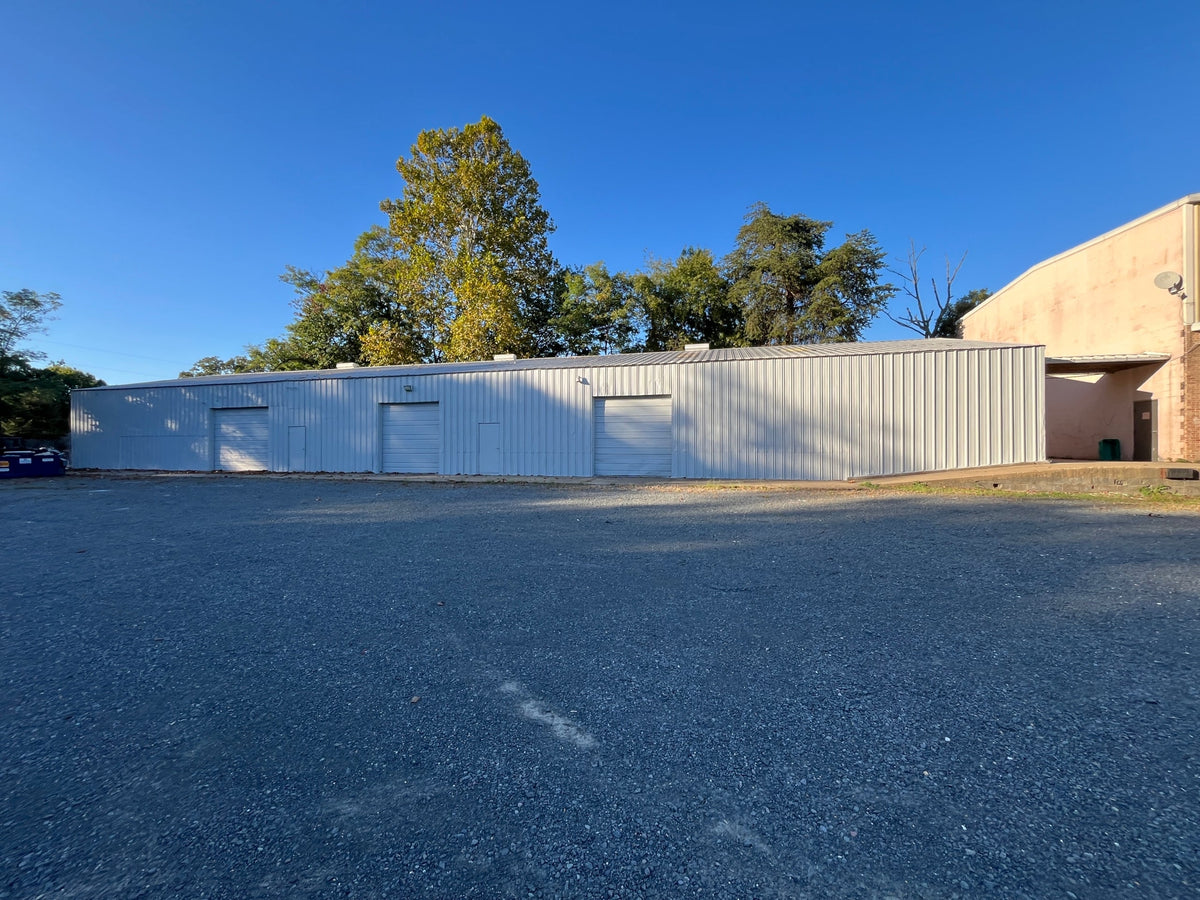
- A lower-ceiling unit in a multi-tenant building with one drive-in door, suited to light storage or trades.
The footprint is the same, but your ability to store product, load trucks and run your business is not. That is why the checklist below matters more than the headline number.
Step 1: Define your requirements
| Requirement | Questions to answer |
|---|---|
| Office vs warehouse split | How many people need office space? Do you need a showroom or counter? Does the 10,000 SF include the office or only warehouse? |
| Clear height | How high will you stack or rack? Clear height is measured to the lowest obstruction, such as a beam or sprinkler pipe. |
| Loading | Do you need dock-high doors, drive-in (grade-level) doors, or both? What truck sizes will visit, and is there a truck court or enough turning room? |
| Power | What voltage, amperage and phase do your equipment, chargers or cooling require? |
| Parking | How many employee and customer spaces? Do you need trailer or fleet parking or outdoor storage? |
| Zoning and use | Does your use fit the zoning and any use restrictions in the lease? Does it involve customer visits, retail sales or hazardous materials? |
| Fire protection | What type of sprinkler system is installed, and does it suit what you store? |
| Timing | When does your current lease end, and when do you need to open? |
Also decide your flexibility. Would you take 8,000 to 12,000 square feet? Would you accept a unit with a lower clear height if the location is better? Defining what is firm and what is flexible widens the pool of buildings.
Step 2: Pick the right submarket
Northern Virginia's industrial and flex space is spread across several well-known areas, each with different advantages. A fuller overview is in our guide to the best locations for industrial businesses in Northern Virginia. In short:
- Manassas and Prince William County. Often considered by businesses that want access to I-66 and Route 28 and a location farther from Washington, DC. See warehouses for lease in Manassas and Prince William County.
- Dulles corridor. The areas near Dulles International Airport, Route 28 and the Dulles Toll Road, including Sterling, Chantilly and Herndon, are popular for businesses that value airport access and proximity to Fairfax and Loudoun customers. Read our guide to industrial and flex space in the Dulles corridor.
- I-95 corridor. Woodbridge, Lorton and nearby areas serve users who rely on I-95 and the Route 1 corridor for access to Washington, DC and points north and south. See warehouses for lease in Woodbridge and Lorton.
Where you locate also affects your employees' commutes, delivery routes and how quickly you can reach customers. Map your top ten delivery destinations or customer locations before choosing.
Step 3: Understand the lease and the real cost
Industrial leases are often triple net (NNN). That means you pay base rent plus your share of property taxes, insurance and common area maintenance (CAM). Our articles on triple net leases and CAM charges explain these in more detail.
Here is a hypothetical example of how the numbers add up. Suppose a 10,000 square foot space is quoted at $12 per square foot base rent, plus $4 per square foot in NNN charges. That is $16 per square foot, or $160,000 a year, or about $13,333 a month. Those figures are only an illustration and are not current market rates. Actual rents and NNN charges vary by submarket, building quality, age and features, so ask for current comparable leases from a broker or a database such as CoStar.
When comparing buildings, ask for the NNN estimate and what it includes. Also review:
- Annual rent escalations, and whether they are fixed percentages or tied to an index.
- The lease term, renewal options and any early termination rights.
- Security deposit and any personal guaranty.
- Responsibility for the roof, structure, HVAC and parking lot repairs.
- Any tenant improvement allowance or free rent period. See how to negotiate tenant improvement allowances.
Step 4: Start with what is available now
Availability changes, so confirm current status on each listing page or by phone. At the time this article was prepared, these listings were shown as available for lease on our site:
- FOR LEASE | ±10,000 SF FLEXIBLE COMMERCIAL SPACE on Liberia Ave, Manassas (9705 Liberia Ave Unit 399, Manassas, VA 20110)
- 7,224 SF Warehouse For Lease for Distribution and Retail Manassas, VA (8022 Centreville Rd, Manassas, VA 20111)
- ±5,808 SF Warehouse For Lease for Distribution and Retail Manassas, VA
The last two are smaller than 10,000 square feet, but they are worth knowing about if you are open to taking more than one unit, or if your needs are closer to 5,000 to 7,500 square feet. Details such as clear height, doors and power should be confirmed on each listing or by calling us. For the full picture, browse all properties for lease.
Step 5: Tour with a checklist
When you visit a short list, bring a written checklist and take photos and measurements. Do not rely on a flyer for dimensions that matter to your use.
- Measure clear height at the lowest and the highest points.
- Count and test dock doors, levelers and drive-in doors.
- Check the truck court: can your largest truck turn and back in?
- Confirm electrical service on the panel, not just on the flyer.
- Look at the floor, roof condition, lighting and HVAC in the office area.
- Count parking spaces and check for trailer or outdoor storage rules.
- Ask what the neighbors do, whether there are noise or hours restrictions, and how the building handles shared areas.
- Verify the zoning and certificate of occupancy for your use with the local jurisdiction.
How a tenant representative helps
A tenant representative works for you, not the landlord. For a 10,000 square foot warehouse search, that typically means screening listings against your requirements, finding space that is not widely marketed, managing tours, requesting proposals from several landlords, and negotiating the letter of intent and lease. Read why your business needs a commercial tenant representative and our tenant representation page for more. For timing, start early: lease negotiations, build-out and permitting can take longer than expected, so give yourself a cushion before your current lease ends.
This article is general information, not legal advice. Have an attorney review any lease before you sign.
Next step
Ready to start your search? Call 703-505-3501 or send us your requirements. Tell us the size range, timing, loading and power needs and preferred areas, and we will talk through what is available and what to prioritize.
Frequently asked questions
How much does a 10,000 square foot warehouse cost to lease in Northern Virginia?
It varies by submarket, building quality, clear height and lease structure, and rents change over time. Most industrial leases are NNN, so budget for base rent plus taxes, insurance and CAM. A broker can pull current comparable leases for the area and building type you want.
Where can I find 10,000 square foot warehouses for lease?
Start with our warehouse for rent in Northern VA page, then widen the search with a broker who has access to CoStar and local contacts. Some space is never widely advertised, so ask about off-market options too.
Is 10,000 square feet a good size for a small business?
It can be, depending on your inventory, staffing and growth plans. Compare it against your current footprint plus the next two to three years of growth, and consider whether you need space for racking, packing stations and office.
What is the difference between warehouse and flex space?
Warehouse space is mostly open storage or distribution area with dock or drive-in doors. Flex space combines warehouse with a larger office or showroom portion, which suits businesses that also meet customers or run light assembly.
What clear height do I need?
It depends on how you store goods. If you rack pallets several levels high, you need more clear height than if you shelve or floor-stack. Measure your tallest storage plan and add room for sprinklers and lighting.
How long does it take to lease a warehouse?
It depends on availability, negotiations, any build-out and permitting. Start the search well before your current lease ends. See how long it takes to find and lease commercial space.
Do I need a broker to lease a warehouse?
You are not required to use one, but a tenant representative can save time, widen your options and help with negotiation. We explain how in is tenant representation free?