Buying an owner-user industrial building makes sense when your business needs the space for the long term, you can afford the down payment and ongoing building costs, and ownership will cost about the same as or less than leasing once you count taxes, insurance, maintenance and the cash you tie up. It is a poor fit if your space needs may change within a few years or if the building would strain your operating cash. Run the comparison with real numbers before you decide.
What "owner-user" means
An owner-user is a business that buys a building to occupy it, rather than to rent it to others. Instead of paying rent to a landlord, you pay a mortgage, property taxes, insurance and upkeep, and you build equity in the real estate. Some owner-users also lease part of the building to another tenant to offset costs. Industrial buildings are common owner-user purchases because contractors, distributors, light manufacturers, trades and service businesses often need specialized space they can customize.
For the broader decision, start with our guide on whether you should buy or lease commercial property. This article focuses on the industrial case.
Signs that buying may be right
- Stable, long-term need. You expect to stay in the same location for many years, with predictable space requirements.
- Heavy build-out. You are investing in equipment, power, racking, cranes, compressed air or other improvements that you would not want to leave behind in a leased space.
- Location matters. Your customers, labor pool or suppliers depend on being near a particular corridor.
- Rent exposure. You want protection from lease renewals and rent increases that you cannot control.
- Capital available. You can fund a down payment, closing costs and a reserve without starving the business.
- Growth room. The building or its land can handle future expansion, or you can lease out surplus space.
Signs that leasing may be better
- Headcount, inventory or equipment needs may change significantly within three to five years.
- Your cash is better used for equipment, inventory or hiring.
- You are not sure of the best location yet.
- You do not want to handle roof, paving, HVAC and building-system repairs.
Our guide to finding warehouse space for lease in Northern Virginia is the other side of this decision.
Buy versus lease: how the costs compare
| Cost or factor | Owning | Leasing |
|---|---|---|
| Upfront cash | Down payment and closing costs; lenders often require a meaningful down payment | Security deposit and first month's rent |
| Monthly cost | Loan payment, property taxes, insurance, maintenance, utilities | Base rent plus NNN or CAM charges, depending on the lease |
| Control | Full control of improvements, signage and use, subject to zoning | Limited by lease terms and landlord approval |
| Equity | You may build equity and benefit from appreciation, which is not guaranteed | No equity |
| Flexibility | Selling or relocating takes time and cost | Easier to move at the end of the term |
| Repairs | Owner pays for roof, paving, systems | Depends on the lease; often partly passed through |
Example (hypothetical): suppose a business pays $18,000 a month in rent and charges to lease a 10,000 square foot industrial space. If ownership would involve a $15,000 loan payment plus $3,500 a month in taxes, insurance and maintenance, the monthly cost is $18,500, similar to leasing, but the owner has also put down a large down payment and takes on repair risk. The comparison can change if you rent out surplus space or if interest rates differ. Use real quotes, and have your CPA review the tax effects.
What to check in an industrial building
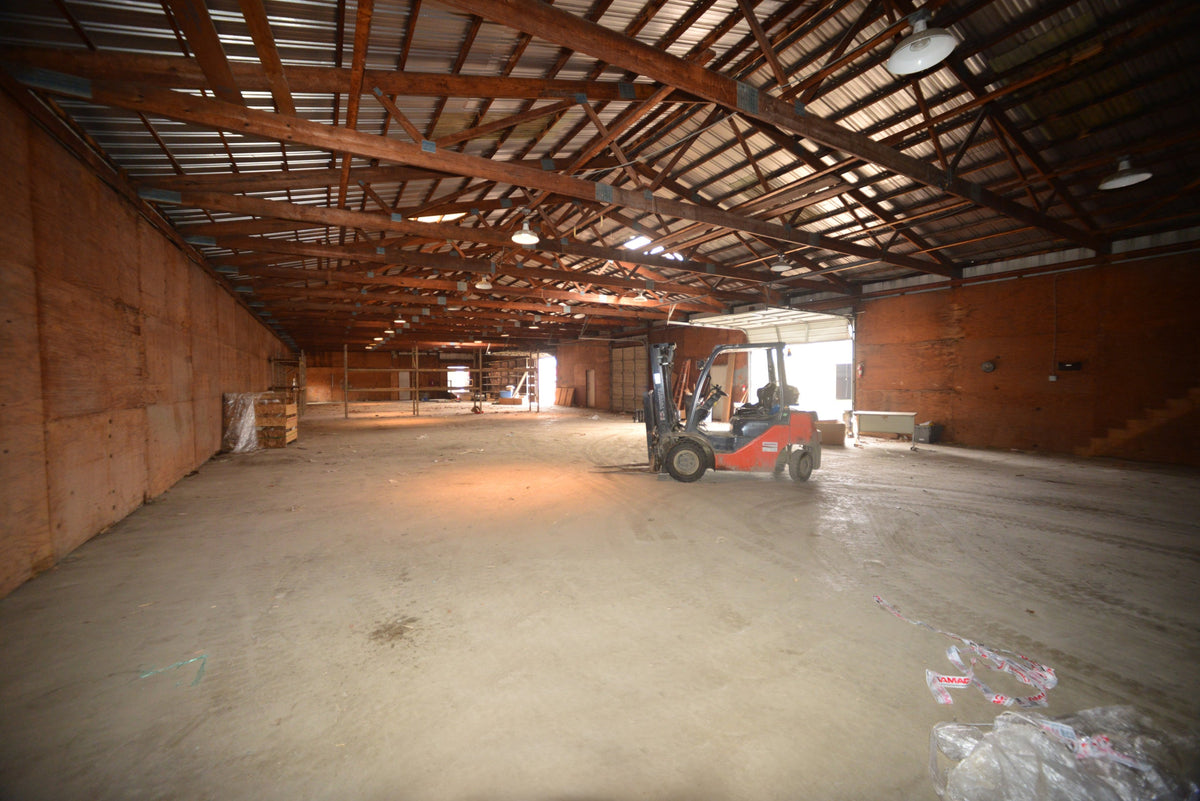
Industrial buildings are defined by their physical features. Before you tour, know your requirements for:
- Clear height (the usable height under the lowest obstruction), which controls racking and stacking.
- Loading: dock-high doors, drive-in doors, truck court depth and turning room. See our guide to loading docks and drive-in doors.
- Office share: how much finished office space you need compared with warehouse or shop. See warehouse with office space for sale.
- Power: amperage, voltage and phase for machinery.
- Zoning and use: whether your business and any outdoor storage, truck parking or manufacturing are permitted.
- Roof, floor slab, sprinklers and HVAC: age, condition and capacity.
- Site and parking: employee parking, trailer storage and room to expand.
Our guide on what to know before buying an industrial warehouse covers inspections and due diligence in more depth.
Financing an owner-user purchase
Owner-users commonly use conventional commercial loans or government-backed programs designed for owner-occupied property, such as SBA 504 or 7(a) loans, when the business qualifies. Programs, down payments, rates and terms change, so confirm current requirements with a lender or SBA-approved lender. Lenders will review your business financials, the property appraisal, an environmental assessment and often a building inspection. Talk with your lender early, before you make an offer.
Location in Northern Virginia
Industrial users in the region look at the Route 28 and Dulles corridor, Loudoun County, Manassas and Prince William County, and areas along I-95 and Route 1, depending on customers, labor and highway access. Zoning and available inventory vary by jurisdiction. Our guide to the best locations for industrial businesses in Northern Virginia compares those considerations, and where to find industrial buildings for sale explains how to search.
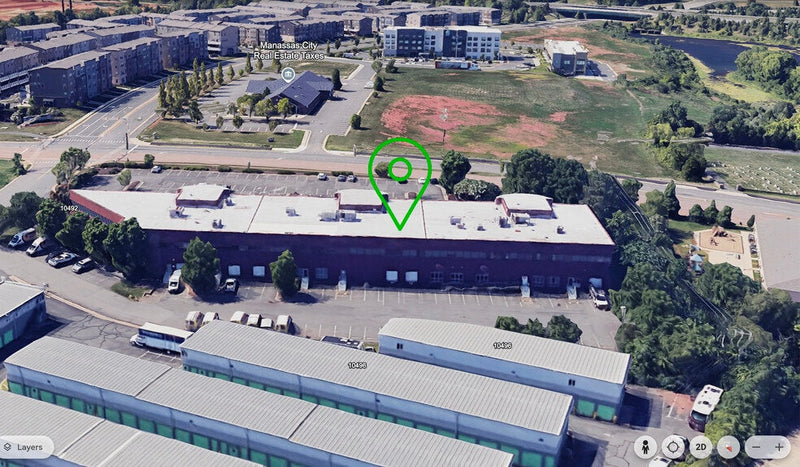
Current opportunities appear on our pages for industrial properties for sale in Northern Virginia and warehouses for sale. For example, our Manassas listings include 10498 Colonel Ct, Godwin Business Park at 10498 Colonel Ct, Manassas, VA 20110, and a 0.94 AC land parcel with I-1 zoning at 9750 Godwin Dr, Manassas. Availability changes, so confirm the status on each listing page or by phone.
Questions to ask the seller and your lender
Before you submit a letter of intent, ask the seller for the last three years of property tax bills, insurance costs, utility bills and repair records, along with the roof and HVAC ages and any environmental reports. Ask your lender how much of the building you must occupy to qualify for owner-occupied financing, what down payment and reserves are required, and how long approval will take. Gather the answers in a side-by-side budget so you can see the true monthly and upfront cost of each candidate building, then compare it with your best lease alternative.
A simple decision process
- List your space, power, loading and location requirements.
- Estimate your five- to ten-year growth path.
- Compare total monthly cost of owning versus leasing using real quotes.
- Talk with a lender and your CPA about financing and tax effects.
- Tour and inspect candidates, and check zoning for your use.
- Consider a broker who represents buyers; see how brokers help buyers.
Talk with us about your next space
Call Fred's Properties at 703-505-3501 or use our contact page to discuss whether buying or leasing fits your business. We represent buyers and tenants, and you can learn more on our tenant representation page. This article is general information, not legal, tax or financial advice; consult your attorney, CPA and lender.
Frequently asked questions
What is an owner-user industrial building?
It is an industrial property bought by a business to occupy for its own operations, rather than purely as a rental investment. The owner may also lease out unused space.
Is it better to buy or lease an industrial building?
It depends on how long you need the space, how much cash you can commit, and how the total cost of owning compares with leasing. Buying suits stable, long-term needs; leasing suits uncertain growth.
How much down payment do I need for an owner-user industrial building?
It varies by lender, loan program and your finances. Owner-occupied programs may require less than investor loans, but you should confirm current terms with a lender.
Can I lease part of an owner-occupied building to another tenant?
Often, if zoning, your loan terms and the building layout allow it. Some owner-user loan programs require that the business occupy a minimum share of the building, so check with your lender.
What should I inspect before buying an industrial building?
Roof, floor slab, sprinklers, electrical capacity, HVAC, loading doors, parking and truck court, and environmental conditions. A building inspector and environmental consultant can help.
Will owning an industrial building save me money?
Possibly, but not always. Compare loan payments, taxes, insurance, repairs and lost investment returns on your down payment with lease costs. Appreciation is not guaranteed.