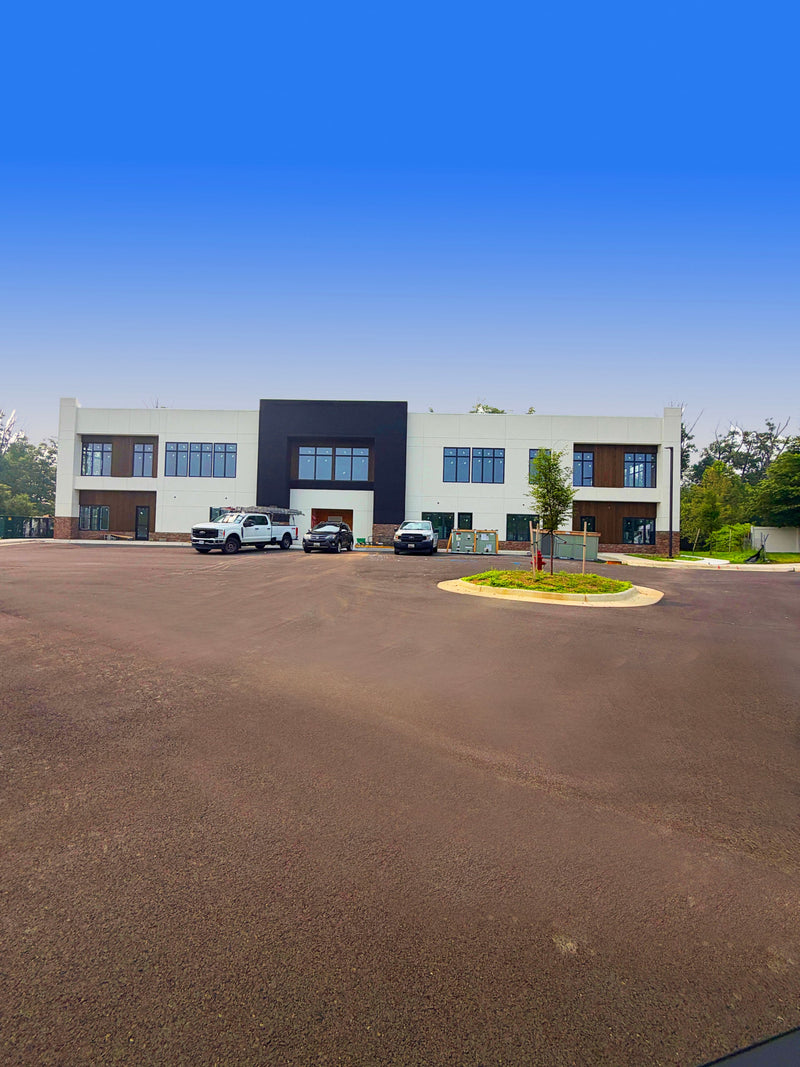
To find commercial properties for lease in Northern Virginia, define your space requirements and budget first, then search listing databases, broker-maintained inventory and local property pages, tour a shortlist, and request written proposals from more than one landlord. Working with a tenant representative widens the search to spaces that are not heavily advertised and helps you compare total occupancy cost, not just the asking rent.
Step 1: Write down what you actually need
Searching without criteria leads to wasted tours. Before you look at a single listing, put these items on paper:
- Use: office, retail, warehouse, flex, medical, restaurant, church, auto or other. Use drives zoning and parking requirements.
- Size: a minimum and maximum square footage, and how much room you need to grow during the lease term.
- Location: the commute for staff, customer access, and proximity to highways such as I-95, I-66, Route 28 or the Dulles Toll Road.
- Building features: parking ratio, loading doors or docks, clear height, power, HVAC, signage and accessibility.
- Timing: when you must be in, and when your current lease ends.
- Budget: a monthly or annual occupancy figure that includes everything, not just base rent.
Step 2: Know the space types you will see
Listings use shorthand. Understanding it saves time.
| Type | What it generally means | Questions to ask |
|---|---|---|
| Office | Suites in single-tenant or multi-tenant buildings, often classified Class A, B or C by quality and finish | Is it measured on a usable or rentable basis? What is the parking ratio? |
| Retail | Storefronts, strip center units and freestanding buildings where visibility and traffic matter | What is the co-tenancy, signage allowance and permitted use? |
| Warehouse and industrial | Space for storage, distribution or light manufacturing | Clear height, dock-high or drive-in doors, truck access, power capacity |
| Flex | A mix of office and warehouse space in one unit | Office-to-warehouse ratio and zoning for your use |
| Special use | Churches, medical, restaurants, day care and similar uses | Does the zoning and occupancy approval fit your use? |
Step 3: Use the right search sources
No single source shows everything. A thorough search usually combines several.
- Broker inventory. A broker with access to CoStar, the commercial real estate database, can see listings, past lease terms and ownership details that are not visible on public sites. Fred's Properties Group has CoStar access.
- Local listing pages. Browse our current commercial properties for lease, including industrial properties for rent in Northern Virginia.
- Driving the area. For retail and small industrial, signs on buildings still matter. Note the broker name and number on any sign that interests you.
- Your network. Neighboring tenants, property managers and local business owners sometimes know about spaces before they are listed.
- Off-market inquiries. Some owners will consider tenants before posting a space. A broker can inquire on your behalf.
If you already know your property type, the dedicated guides on warehouse space and retail space go deeper.
Step 4: Look at current opportunities
To give a sense of the variety, our current availabilities include a 7,224 SF warehouse for lease in Manassas suited to distribution and retail, a flexible commercial space of about 10,000 SF on Liberia Avenue in Manassas, and a 6,000 SF car dealership space in Manassas. Availability changes, so confirm current status before planning around any specific listing.
Matching the search to the Northern Virginia map
Where you look should follow how your business operates. Companies serving government and professional clients often focus on Tysons, Reston and nearby Dulles corridor submarkets for access to the Dulles Toll Road and Washington, DC. Distribution, contractor and flex users often look along Route 28, in Chantilly and Manassas, or on the Route 1 corridor in Prince William County, where truck access to I-95 and I-66 matters. Retail users weigh traffic counts, visibility and neighboring tenants. Availability and rents differ widely among these areas and change over time, so rely on dated comparables from a broker or database rather than general impressions.
Step 5: Compare spaces on total cost
An asking rent is only one piece of the cost. Convert every option to a single annual figure. The following is a hypothetical example, not market data.
For example, suppose a 4,000 square foot space is offered at $20.00 per square foot per year on a triple net basis, with estimated pass-through expenses of $7.00 per square foot for taxes, insurance and common area maintenance (CAM). The estimated annual cost is ($20.00 + $7.00) x 4,000 = $108,000, or $9,000 per month before utilities and any other charges. Another space might be quoted at a higher rent but include expenses, so the two cannot be compared on base rent alone. Ask each landlord for expense history and how increases are calculated. See what a triple net lease is and what CAM means.
Step 6: Tour with a checklist
- Confirm the zoning and permitted use in writing; do not rely on a verbal assurance.
- Check the parking count against your staff and customer needs.
- Test the practical items: HVAC condition, restrooms, loading access, ceiling height and electrical capacity.
- Ask about the building's history with common disputes such as roof leaks or shared systems.
- Ask who handles repairs and which party is responsible for major systems.
- Observe the neighborhood at the times your business will operate.
Step 7: Narrow down and request proposals
Pick two or three finalists and ask for a written proposal from each. A proposal typically covers base rent, escalations, term, expense structure, free rent, tenant improvement (TI) allowance, security deposit and renewal options. Comparing proposals side by side gives you leverage and clarity. Once you pick a preferred space, the next document is usually a letter of intent. See how a commercial real estate letter of intent works, and our guide on how to negotiate a better commercial lease.
Step 8: Have the lease reviewed
Do not sign until a real estate attorney has reviewed the lease. A broker can explain business terms, but legal interpretation, guarantee exposure and restoration obligations belong with your counsel. If tax or accounting treatment matters, consult a CPA.
Common mistakes to avoid
- Starting too late. Search, negotiation, lease drafting and build-out can take months. Begin well before your current lease expires.
- Focusing only on rent. Expenses, concessions and flexibility can outweigh a small rent difference.
- Ignoring zoning. A space that looks perfect may not allow your use.
- Looking at only one landlord. Without alternatives, you have limited leverage.
- Assuming a renewal is automatic. Testing the market can improve the terms even if you stay.
How a tenant representative helps the search
A tenant representative surveys the market, narrows options to those that fit, handles landlord outreach and negotiates on your behalf. Compensation commonly comes from the landlord's commission, but confirm that in writing. Our tenant representation page explains how we work, and this article explains why many businesses use one.
Next step: start your search
If you would like help finding space in Fairfax, Loudoun or Prince William County, or you want a second opinion on a space you are considering, call 703-505-3501 or send details through our contact page.
Frequently asked questions
How do I find commercial space for lease near me?
Define your needs, then search broker inventory, listing pages and local signage, and ask a broker to inquire about spaces that are not publicly advertised. Tour a shortlist and compare written proposals.
How long does it take to lease commercial space?
It varies with the space type, the complexity of the lease and any build-out. Searching, negotiating, drafting and buildout together can take several months, so starting early is wise.
What is the difference between NNN and gross leases?
In a triple net lease the tenant pays base rent plus a share of taxes, insurance and common area maintenance. In a gross lease, the landlord covers most of those costs within the rent. Modified gross falls in between.
Can I negotiate the asking rent?
Yes. Asking rent is a starting point. Rent, free rent, TI allowance, escalations and options are all negotiable, and competing alternatives strengthen your position.
Do I need a broker to lease commercial property?
No, but a tenant representative can expand your search, compare proposals and negotiate terms. Many tenants find the value highest for longer or more complex leases.
What documents might a landlord ask for?
Landlords commonly request financial statements, a business description, and sometimes a personal guarantee or security deposit. Requirements vary, so ask early and prepare these documents in advance.